
What Is The Best Cleaner For Epoxy Resin Countertops?
Quick Summary
The best cleaner for epoxy resin countertops is a mild soap or a gentle household cleaner such as Simple Green, applied with a soft cloth and followed by a rinse. Acetone, used carefully where permitted, removes stubborn residue, and a moistened white light-duty pad handles marring. Avoid wax, abrasive powders, dry scouring pads, and thermal shock from liquid nitrogen or dry ice. Prompt spill cleanup and regular inspections keep epoxy surfaces performing for years in busy laboratories. Consistent care also protects the appearance of your laboratory countertops.
Epoxy resin earns its reputation in laboratories because it withstands acids, solvents, heat, and moisture. Even so, the question of the best cleaner for epoxy countertops comes up often, because the wrong product can dull a surface that would otherwise keep its appearance for years. At LOC Scientific, we manufacture and install these surfaces, and we know that routine care is what keeps a bench looking its best year after year.
Why Cleaning Method Matters for Epoxy Resin
Epoxy resin is a durable, non-porous, man-made stone. Most chemicals, heat, flame, and moisture barely affect it. That toughness tempts people to assume any product is fair game. It is not, and the cleaning method you choose has real consequences for the finish.
Scratches in epoxy resin are permanent, and chemical stains caused by substances left to dry on the surface are permanent as well. Neither affects the performance of the worksurface, but both change its appearance. Gentle, consistent cleaning is therefore the most effective way to protect your investment in quality laboratory countertops. For more on lifespan, see our guide to how long epoxy countertops last in the laboratory.
The Best Everyday Cleaner for Epoxy Resin Countertops
For daily and weekly cleaning, the best cleaner for epoxy resin countertops is a mild soap solution or a comparable household cleaner. The care guidance in our Epoxy Resin Installation and Care Manual specifically lists mild soap, household cleaner, and Crystal Simple Green as suitable options.
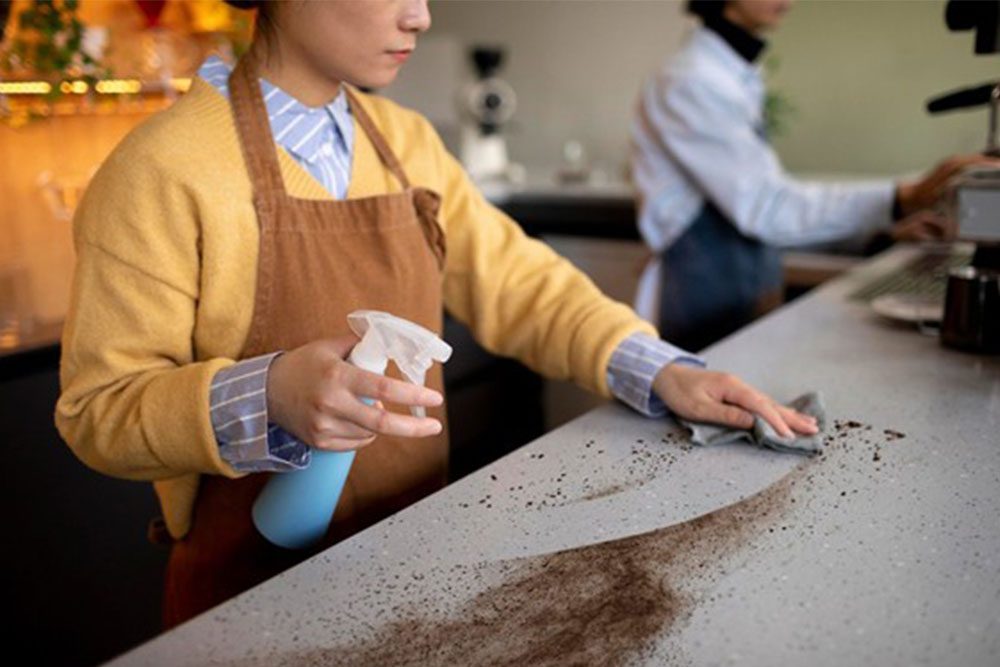
Apply the cleaner with a soft cloth or sponge, work across the surface, and wipe dry with a clean rag. The guiding principle is to always try the softest cloth and the weakest solution first. Only move to stronger methods if the residue does not lift. Our five tips for cleaning lab countertops and our post on the cleaning and care of epoxy resin countertops offer a quick routine to follow.
Removing Stubborn Residue and Marks
Some residue needs more than soap and water. Acetone, used where your facility permits, cleans epoxy surfaces thoroughly when applied with a clean rag or paper towel and wiped away. Because acetone is flammable and produces vapors, work in a ventilated area, keep it away from ignition sources, and follow your laboratory safety procedures.
Marring is a separate issue. Metals that are softer than epoxy resin can leave a thin line of themselves on the top when dragged across it. Run a finger over the mark and it feels smooth. Acetone or a mild cleaning product, applied patiently, will almost always lift it. If the line stays, reach for a white light-duty Scotch-Brite pad. Keep it moistened, never dry, and use minimal pressure.
What to Avoid When Cleaning Epoxy Surfaces
Wax and polishes that contain wax should never be applied to epoxy work surfaces or sinks. Abrasive pads, powders, and liquids, including products such as Soft Scrub, dull the finish. Dry scouring pads can mark the surface, so any pad should be moist or wet. Letting chemicals dry on the surface invites staining, so spills should be wiped up promptly.
Then there is thermal shock. Liquid nitrogen and dry ice can damage epoxy resin products, and glued-in sinks are especially exposed. They are not warranted against that kind of damage. Dispose of either material improperly and you risk joint failure or a fractured sink. Keep both well away from sinks and countertops.
Restoring Luster With Oil
Surfaces can lose some sheen as the years go by. Mineral finish oil or Murphy’s Oil, applied now and then, can bring the luster back. Go lightly, however. Too much oil clouds the surface.
Pour only the minimum amount needed onto a clean rag, rub it in with a circular motion, and wipe away the excess. A chamois can then buff the surface to the desired sheen. This step is optional and should be occasional rather than part of daily cleaning.
Disinfection and Decontamination
Laboratories often need to do more than clean. Epoxy resin is highly resistant to commonly used laboratory alkalis, alcohols, acids, and solvents, which makes it compatible with many routine decontamination steps. Your decontamination procedures should follow your written Chemical Hygiene Plan, and OSHA’s laboratory standard requires those plans to include decontamination procedures for particularly hazardous substances.
Before introducing a new disinfectant, check it against a chemical resistance chart and confirm that it is compatible with epoxy resin and follow the manufacturer’s contact time. Rinse afterward so that no residue remains on the surface. If you are unsure, our team is happy to advise.
Caring for Sinks and Joints
Sinks are usually the hardest spot to keep clean in any laboratory, including epoxy laboratory sinks. Dirty, wet labware sits in them, so liquids, residue, and chemicals linger on the surface far longer than they do on a dry benchtop. Plan for a deeper cleaning routine there, and inspect sinks more often than the rest of the bench.
Check every sink surface and joint. That means the outlet joint and the sink rim joint, both above and below the worksurface. Fill any cracked or pitted joint promptly with a two-part epoxy grout, which stops leaks and protects the supporting casework underneath. Our guide to repairing epoxy resin countertops covers repairs in more detail.
Choose Laboratory Countertops Built to Last
Training and communication make a real difference. Staff who reach for the wrong product can damage a surface without meaning to, so post a short list of approved cleaners near the sink and include it in new user orientation. Custodial teams in particular benefit from clear guidance, since they may be unfamiliar with laboratory surfaces and the materials that can harm them.
Our epoxy resin countertops are manufactured in the United States with a uniform composition throughout, rather than relying on a fragile surface coating. They offer strong chemical resistance, self-extinguishing properties, and a water absorption rate of just 0.01 percent. Combined with sensible care, these qualities help keep a laboratory running reliably for years.
Planning new laboratory countertops or need advice on caring for existing ones? Contact LOC Scientific and our team will guide you toward the right surfaces and care routine.
Frequently Asked Questions
A mild soap solution or gentle household cleaner such as Simple Green is the best everyday choice. Apply it with a soft cloth, rinse, and dry. Start with the weakest solution and the softest cloth, and move to stronger methods only when necessary.
Yes, where your facility allows it. Acetone cleans epoxy surfaces thoroughly and removes marring when applied with a clean rag. Because it is flammable and produces vapors, use it in a ventilated area and follow your safety procedures.
Avoid wax and polishes containing wax, abrasive powders, scouring liquids, and dry scrubbing pads. Also keep liquid nitrogen and dry ice away from sinks and countertops, since thermal shock can crack joints and fracture sinks.