
Countertops absorb more daily abuse than almost anything else in a lab. Chemical spills, heavy equipment, constant cleaning cycles, and the occasional dropped instrument all land on the same surface, which is why material choice matters more here than nearly anywhere else in the room. At LOC Scientific, our laboratory countertops and sinks are made in the USA and built to hold up to that kind of use without cracking, staining, or breaking down.
The right laboratory countertop also needs to fit the way your team actually works. A teaching laboratory may prioritize affordability and everyday durability, while a chemistry or pharmaceutical lab may need stronger chemical resistance. Healthcare and microbiology environments often place greater emphasis on sanitation and easy cleaning.
Choosing the surface based on the laboratory's specific demands can help create a safer and more practical workspace.
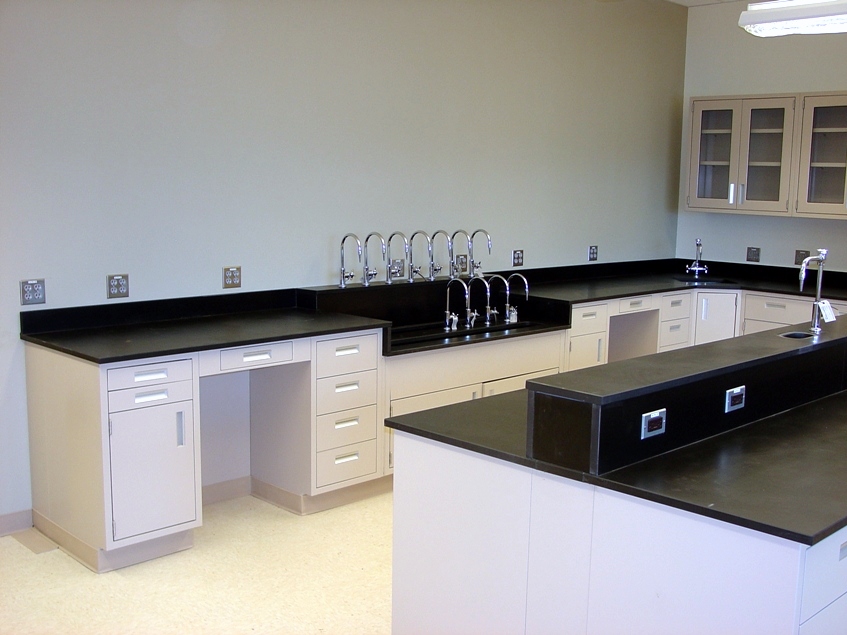
Our Laboratory Countertops and Sinks
The demands of laboratory environments across healthcare, research, education, and industrial fields are diverse and rigorous. They require equipment and solutions that prioritize safety, efficiency, and precision. We provide a complete range of laboratory countertops and sinks to meet any lab space's technical needs and design goals. Every product we offer combines function, durability, and visual appeal.
Our laboratory countertops and sinks combine durability, functionality, and precision to enhance every workspace.
Shop by Material
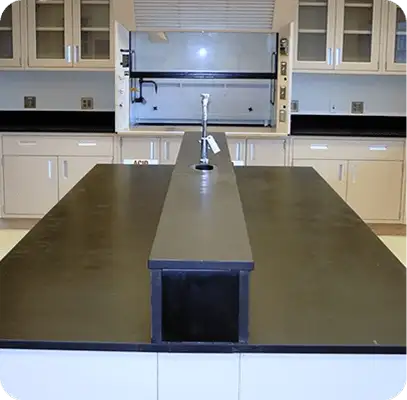
Epoxy Resin Countertops
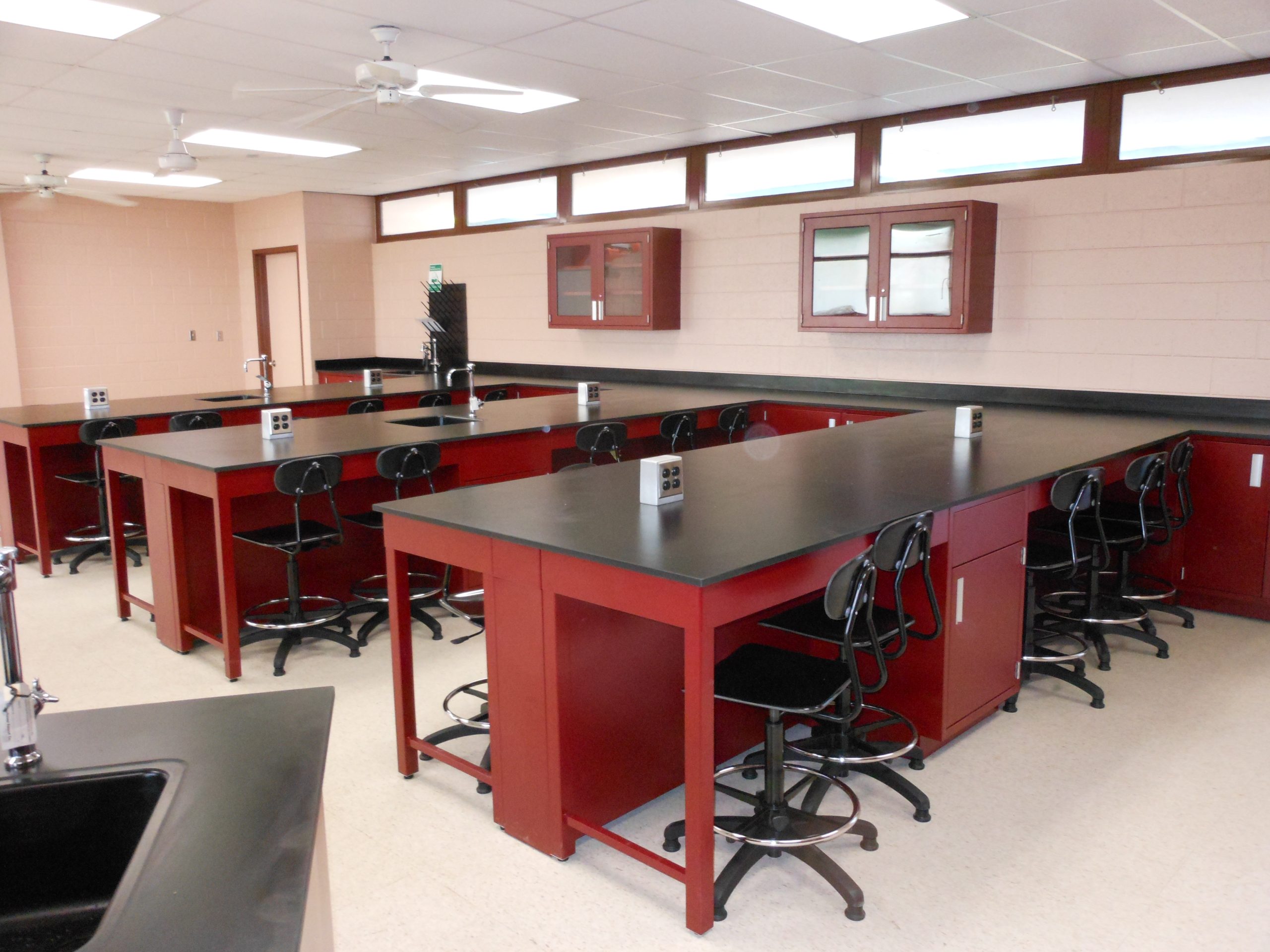
the broadest chemical resistance of the standard laboratory countertop materials, well suited to labs working with strong acids, bases, and solvents.,...
Read More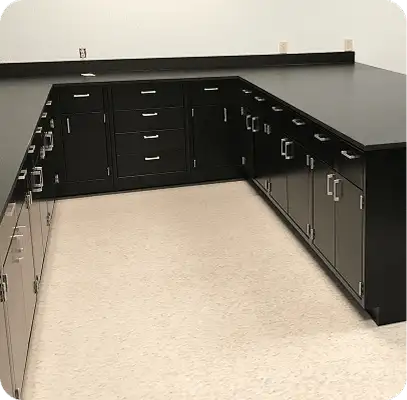
Trespa Phenolic Resin Countertops
a lighter, cost-effective surface with strong resistance to heat, moisture, and impact. Read more in our breakdown.,...
Read More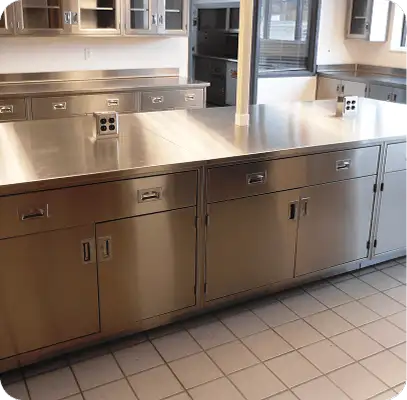
Stainless Steel Countertops
unmatched sterilization and corrosion resistance, a common choice for healthcare, pharmaceutical, and microbiology labs. Stainless steel also offers a smooth, nonporous.,...
Read MoreThe connection between lab sinks and countertops is another important detail. A properly planned installation can make cleaning easier and reduce areas where liquids, residue, or contaminants can collect. Selecting compatible materials and an appropriate mounting configuration from the beginning can also help simplify maintenance over the life of the laboratory.
Comparison Table
A quick side-by-side of how the three core materials perform against the questions labs ask most often:
| Material | Chemical Resistance | Heat Resistance | Best For |
|---|---|---|---|
Epoxy resin |
Excellent |
Excellent |
Heavy chemical use, high-heat applications |
Phenolic resin |
Very good |
Good |
General labs balancing cost and durability |
Stainless steel |
Very good |
Excellent |
Sterile, hygiene-critical environments |
These comparisons are a starting point rather than a substitute for evaluating the specific chemicals, temperatures, equipment, and cleaning products used in your laboratory. Two labs may have very different requirements even when they perform similar types of work. Our team can help you compare the material options based on how the finished countertop will actually be used.
Laboratory Sinks
Sinks are part of this category but easy to overlook until installation day. Our laboratory sinks come in epoxy and stainless steel, in drop-in and undermount configurations, and we pair the sink material with the surrounding countertop so the seams hold up under the same chemical exposure as the rest of the surface. Getting that pairing right at the design stage avoids a mismatched, leak-prone joint later on.
Lab sink selection should also take into account how often the basin will be used and what will be washed or rinsed in it. A research lab handling aggressive chemicals may have different requirements from a school laboratory or a general-purpose workspace. The sink size, mounting style, surrounding countertop, and expected chemical exposure should all be considered together during planning.
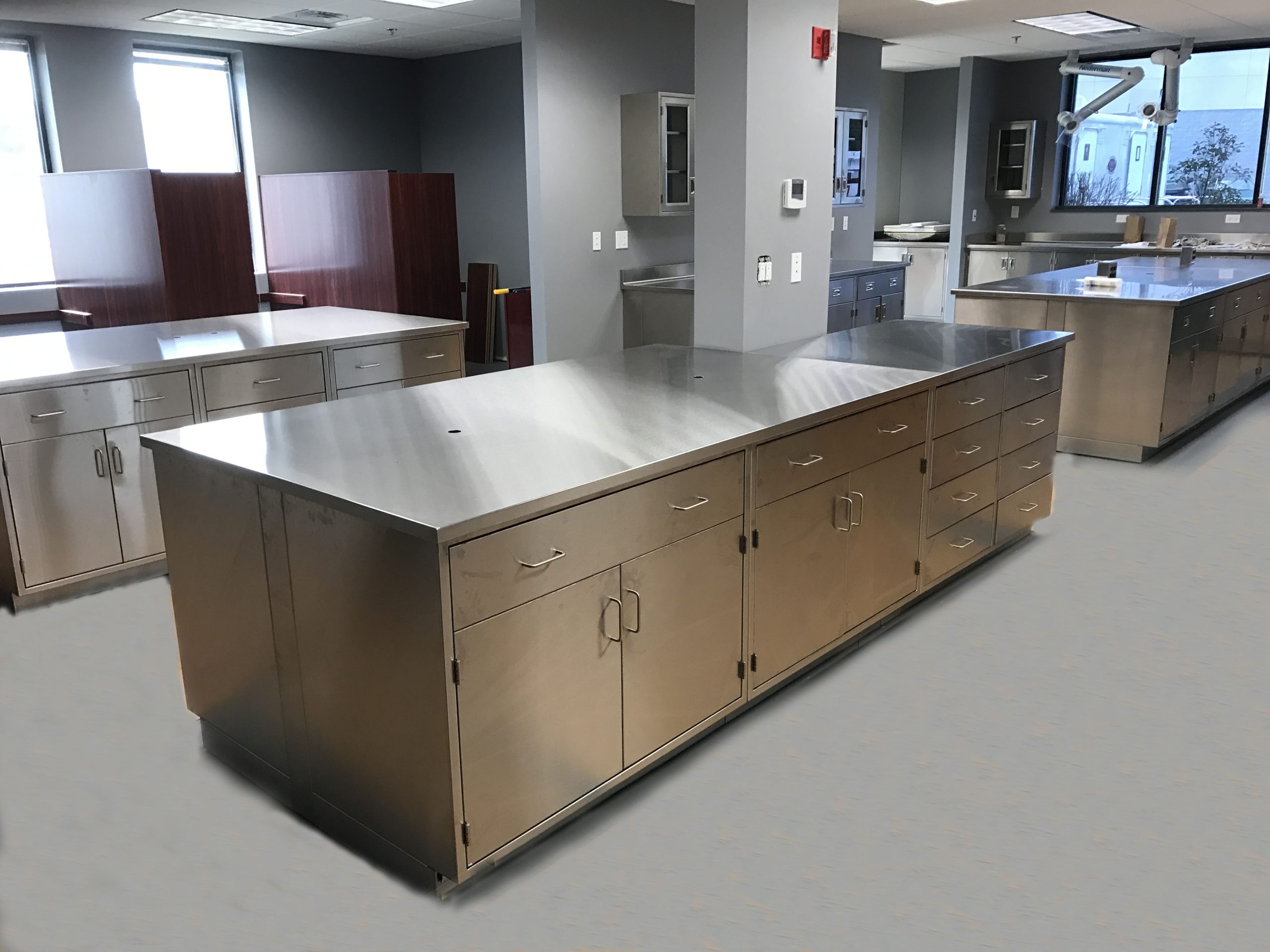
The connection between lab sinks and countertops is another important detail. A properly planned installation can make cleaning easier and reduce areas where liquids, residue, or contaminants can collect. Selecting compatible materials and an appropriate mounting configuration from the beginning can also help simplify maintenance over the life of the laboratory.
Work Surface Considerations Beyond Material
Material is the biggest decision, but it isn't the only one. Edge treatments affect how spills are contained versus how they run onto the floor. Backsplashes protect the wall line behind a bench. Integrated sinks reduce the number of seams a chemical can work its way into. And a chemical spill containment lip along the perimeter of a countertop can be the difference between a contained accident and a much bigger cleanup. We account for all of it when we design a work surface, not just the material sitting on top.
Tell us about your laboratory, materials, equipment, and layout. Our team can help you choose the right countertop solution for your application.
FAQs
Epoxy resin is typically the strongest all-around choice for chemistry labs handling aggressive acids, bases, and solvents, thanks to its high chemical and heat resistance. Phenolic resin is a solid, more budget-friendly alternative for moderate chemical exposure.