
A lab is only as reliable as the furniture holding it together. Every countertop spill, every dropped instrument, every year of daily wear tests the cabinets, benches, and workstations underneath the science, and office grade furniture simply isn't built for that job. At LOC Scientific, our laboratory furniture is engineered specifically for lab conditions: chemical exposure, heavy daily use, and the kind of scrutiny that comes with a regulatory inspection.
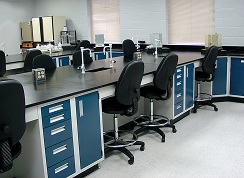
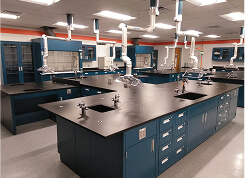
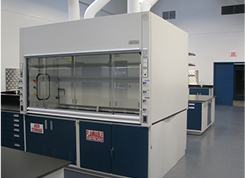
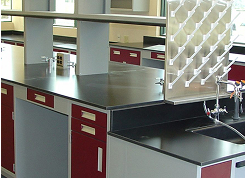
That starts with the cabinets and casework that hold up under daily chemical exposure, the benches and workstations built to take a beating shift after shift, countertops engineered for the same abuse (see our countertop options here), and the service fixtures that keep gas, water, and power running safely to where they're needed.
Because we manufacture everything in the USA, we can build to your lab's exact layout and workflow instead of asking you to fit your space around a catalog size.
Shop by Product Type
Browse our laboratory furniture by category, or reach out and our design team will help you match materials to your application:
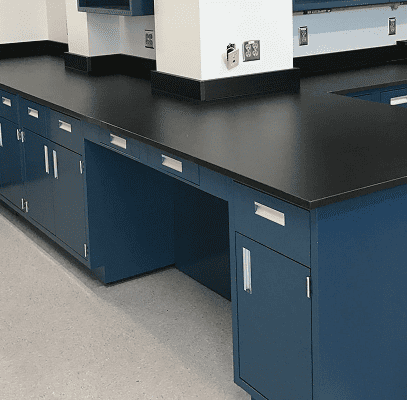
Metal Lab Cabinets & Casework
Steel casework with a chemical-resistant, powder-coated finish, built for high-traffic labs.
Read More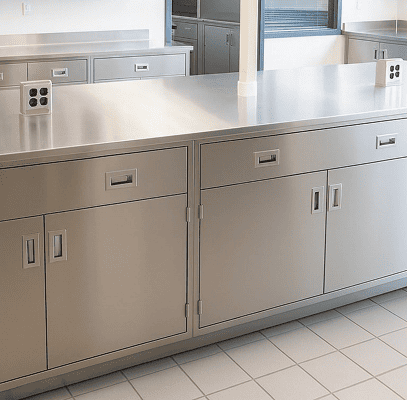
Stainless Steel Cabinets & Casework
A hygienic, corrosion-resistant option for labs that need frequent sanitization.
Read More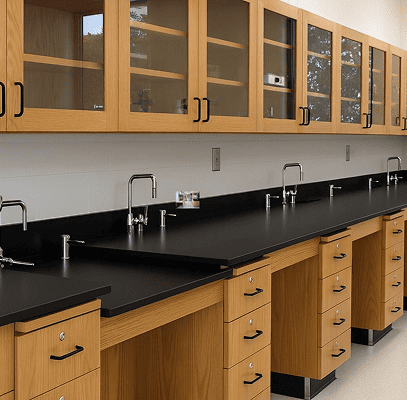
Wood Lab Cabinets & Casework
A warmer aesthetic for teaching labs, research settings, and client-facing spaces without sacrificing durability.
Read More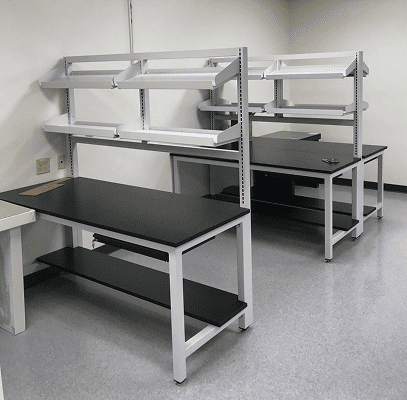
"BASICS" Modular Workbench and "HD" Modular Workbench
Cantilever and heavy-duty modular systems that reconfigure as your lab's needs change.
Read More
Laboratory Workstations
Adaptable Table Systems that let you resize and re-equip a workspace without involving electrical or mechanical trades.
Read MoreEach product category addresses a different laboratory need. Metal casework can be a practical choice for high-traffic environments, while stainless steel works well where sanitation is a priority. Modular workbenches and adaptable workstations add flexibility for facilities that expect equipment or workflow changes. Storage is another important consideration when selecting laboratory furniture. Cabinets need to accommodate the supplies, instruments, samples, and other materials used every day without creating unnecessary obstacles. A well-planned storage layout can keep frequently used items accessible while reducing clutter around active work areas.
Materials Guide
Material choice affects nearly everything about how long lab furniture lasts. Metal offers strength and impact resistance; wood introduces warmth for spaces where atmosphere matters; polypropylene and phenolic resin hold up against aggressive chemicals; and plastic laminate keeps costs down where exposure is lighter.
Material selection should start with the conditions the furniture will face. Consider the chemicals used in the room, cleaning frequency, moisture exposure, temperature, impact risk, and expected traffic. A material that works well for a classroom or general research environment may not be appropriate for a laboratory handling aggressive chemicals every day.
For a closer look at how these materials compare, see our breakdown of lab casework features and materials.
| Material | Chemical Resistance | Best For | Typical Cost Tier |
|---|---|---|---|
Metal (steel) |
Good |
High-traffic, general-purpose labs |
Moderate |
Wood |
Fair |
Teaching, research, client-facing spaces |
Moderate |
Plastic laminate |
Fair |
Budget-conscious, lower chemical exposure |
Lower |
Phenolic resin |
Excellent |
Labs with regular chemical exposure |
Higher |
Cost is only one part of the material decision. The expected service life, cleaning requirements, chemical exposure, and maintenance needs can affect the long-term value of laboratory furniture. Selecting a material based on actual laboratory conditions can help avoid premature replacement or unnecessary maintenance.
Who We Build For
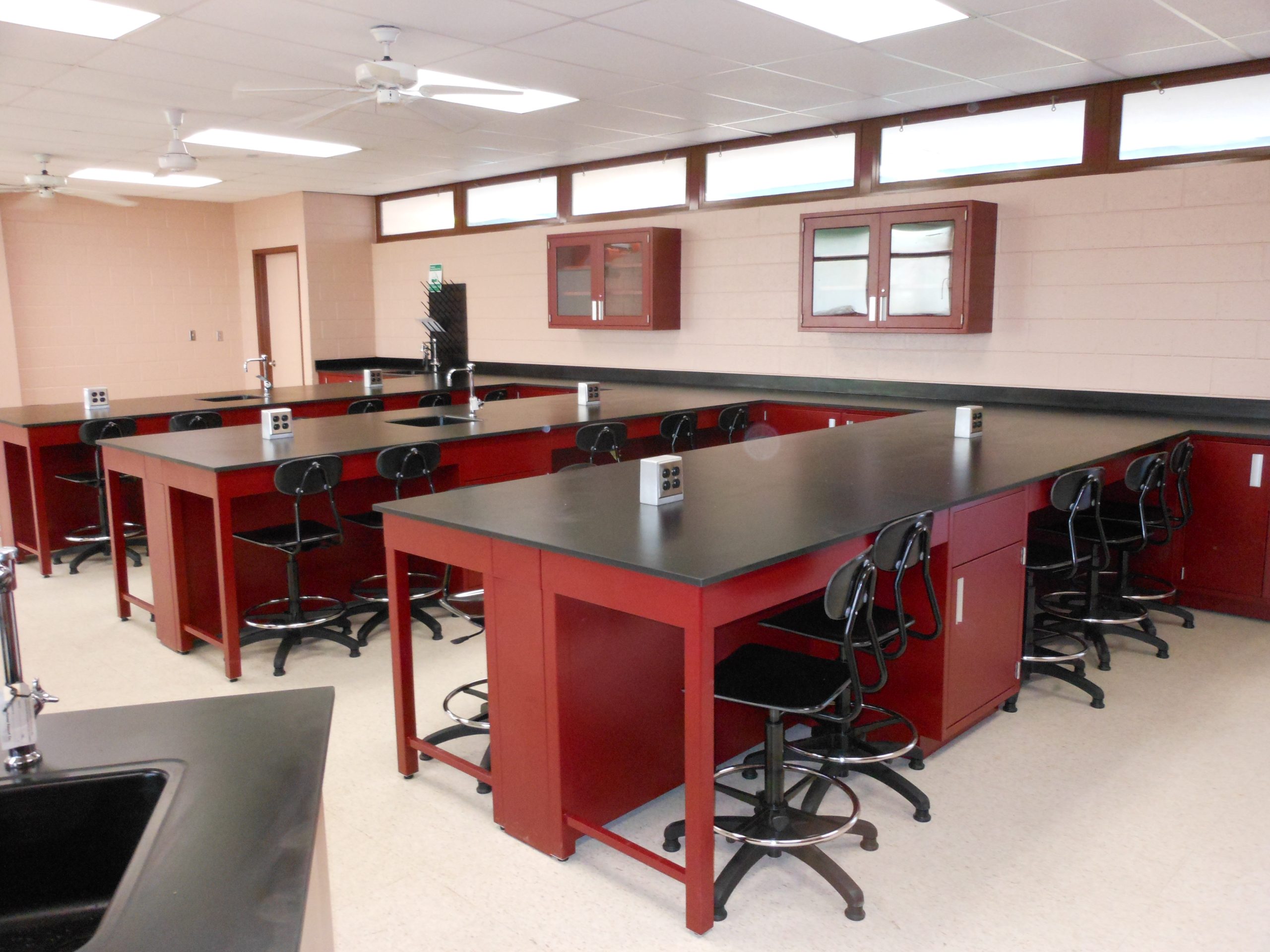
We serve several industries. Our furniture is used across research, education, healthcare, and industrial settings, each with its own demands on layout, materials, and compliance:
-
Research & Development labs
Where equipment and methods change often
-
Educational venues
where furniture has to survive constant, varied use
-
Industrial and government labs
where compliance and heavy-duty performance are non-negotiable
Why Modular & Custom Matters
Fixed casework is a fixed decision. Labs, on the other hand, rarely stay still — new instruments arrive, headcount shifts, and protocols get revised. Modular laboratory furniture is built to absorb that change: benches reconfigure, storage expands, and layouts adjust without a full renovation.
That's why our laboratory furniture design starts with modularity as a default, not an upgrade. It protects the investment you've already made and keeps a lab from becoming outdated the moment its research does.
Industry Standards and Certifications
We adhere to strict industry standards to maintain the highest quality and safety for our products. Our laboratory furniture and accessories comply with recognized certifications such as SEFA (Scientific Equipment and Furniture Association) standards. This helps us guarantee exceptional performance and reliability.
Customization and Efficiency
Every laboratory requires solutions for specific needs. We offer customization options for furniture and accessories, enabling you to create a workspace that supports your operations. Our processes and experienced team facilitate timely delivery and installation.

FAQ
Most laboratory furniture is built from metal, wood, plastic laminate, polypropylene, or phenolic resin. The right material depends on chemical exposure, budget, and how the space will be used day to day.