
What Is The Best Material For Your Lab Cabinets?
Quick Summary
The material used in your lab cabinets affects safety, durability, and daily performance. Each option offers different strengths based on the environment. We design cabinet systems using materials that match your workflow and space. Our goal is to create reliable, organized labs that support long-term use and consistent results.
Choosing the right lab cabinet material is a key step in designing a functional laboratory. The material affects how cabinets perform under daily use, cleaning routines, and chemical exposure. Every lab operates differently, so the material must align with specific needs.
We work closely with clients to evaluate their environment and recommend the best solution. The focus stays on building cabinet systems that improve safety, efficiency, and long-term reliability.
Why Material Choice Shapes Daily Lab Operations
Material selection directly impacts how a lab performs. Cabinets must handle equipment weight, constant use, and exposure to various substances. Weak materials can lead to damage, safety risks, and disruptions.
A detailed evaluation process is used when selecting materials. Workflow patterns and environmental conditions are carefully reviewed. This allows systems to be designed for dependable performance under pressure.
The right material helps maintain smooth operations and reduces downtime. A well-built cabinet system keeps staff focused without unnecessary interruptions.
Stainless Steel Cabinets For High-Performance Labs
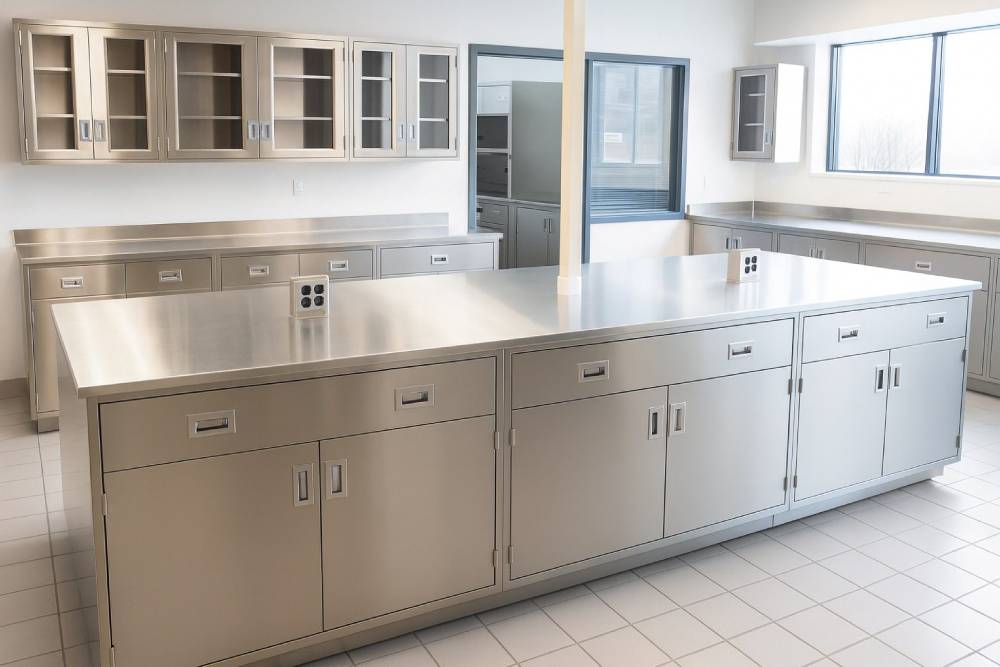
Stainless steel is one of the most reliable options for demanding lab environments. It resists corrosion, handles moisture, and supports frequent cleaning. This makes it a strong choice for labs that require strict hygiene.
We design stainless steel cabinets and casework for facilities that need durability and cleanliness. These cabinets maintain their strength under heavy use.
Their non-porous surface resists bacteria and supports sanitation. Stainless steel also holds up well against temperature changes and chemical exposure. This helps maintain a clean and controlled workspace over time.
Metal Cabinets For Heavy-Duty Environments
Metal cabinets offer strong structural performance for labs with high activity levels. They resist impact and handle heavy equipment with ease. This makes them suitable for industrial and research settings.
Metal cabinet systems are built for long-term use. These cabinets maintain shape and function even under constant workload. Their durability reduces repair frequency and helps keep operations steady with fewer interruptions.
Wood Cabinets For General Laboratory Use
Wood cabinets serve many lab environments where exposure to harsh chemicals is limited. They offer a balance of durability and visual appeal. This makes them a practical option for teaching labs and research spaces.
We design wood casework that supports storage and organization. These cabinets fit well in spaces that require a clean and professional appearance. While not ideal for highly corrosive environments, they perform reliably in controlled settings and general applications.
Polypropylene Cabinets For Chemical Safety
Polypropylene cabinets are well suited for labs that handle aggressive chemicals. The material resists corrosion and does not react with many substances, making it a safe option for chemical storage.
These systems help reduce risk during storage and handling. Their non-reactive surface supports safer conditions for both materials and lab personnel in chemical-intensive environments.
Phenolic Resin Cabinets For Moisture Resistance
Phenolic resin is known for strong resistance to moisture and impact. It performs well in environments with high humidity or frequent cleaning cycles, maintaining stability under challenging conditions.
These cabinets are often used where moisture resistance is critical. They hold their structure over time and support consistent performance in demanding lab settings.
Plastic Laminate Cabinets For Cost-Conscious Projects
Plastic laminate cabinets offer a practical option for labs with budget considerations. They work well in spaces with lower exposure to harsh chemicals and heavy use. This material supports general lab functions without high costs.
Laminate cabinet systems are designed for projects that require efficiency and value. These cabinets support organization and storage in controlled environments. While they may not suit high-demand labs, they perform well in lighter-use settings.
How We Match Materials To Your Lab Needs
Every lab has unique requirements that affect material selection. Workflow, equipment, and environmental conditions all play a role. Choosing the wrong material can affect both safety and performance.
We take time to understand each client’s needs. Our team reviews layout, storage demands, and daily operations. This allows us to recommend the best material for each space. Our approach focuses on creating systems that work reliably from day one.
Long-Term Performance And Maintenance Benefits
Material choice affects long-term performance and maintenance. Durable materials reduce wear and extend the life of cabinets. This helps avoid frequent replacements and disruptions.
We focus on materials that handle daily use with consistency. Cabinet systems are designed for regular cleaning and continuous activity. This reduces maintenance concerns and helps maintain steady performance over time.
Custom Cabinet Systems Built For Your Lab
Standard cabinet options do not always meet specific lab needs. Custom solutions help create a better fit for each environment. This improves both workflow and organization.
We design, build, and install custom cabinet systems for every project. Our team works with speed and precision to deliver reliable results. Each solution is tailored to match the lab’s layout and function. Customization helps create a cohesive and efficient workspace.
Build A Lab That Supports Your Success
The right cabinet material supports safety, efficiency, and long-term performance. It allows staff to work with confidence and maintain organization. A well-designed system improves how the lab operates each day.
We bring experience, knowledge, and strong customer support to every project. Our team focuses on delivering solutions that match each client’s goals. Reach out to us today to create a lab environment built for lasting success.
FAQs
What is the most durable lab cabinet material?
Stainless steel and metal cabinets offer strong durability. They handle heavy use and resist damage in demanding environments.
Which material works best for chemical labs?
Polypropylene cabinets are often used in chemical-heavy environments due to their resistance to corrosion and chemical reactions.
Can lab cabinets be customized with different materials?
Yes. We design custom cabinet systems using materials that match each lab’s workflow, storage needs, and environment.
How does cabinet material affect long-term costs?
Material choice impacts maintenance and replacement needs. Durable options reduce wear and lower long-term costs by supporting consistent performance.