
Determining The Right Size For Your Laboratory Sinks
Quick Summary
The right laboratory sink size depends on your largest glassware, how often the sink is used, and the bench space available. Most general purpose lab sinks have bowls between 15 by 8 inches and 25 by 15 inches, with depths of 6 to 12 inches. Compact cup sinks suit quick rinses, while deeper bowls handle tall vessels. Accessible installations call for shallow bowls and clearances. Matching size, depth, mounting style, and material to your workflow keeps cleaning efficient and protects your countertops.
Choosing the right laboratory sink size rarely tops the list of planning priorities, yet it shapes how a lab performs every single day. A bowl that is too small forces staff to wash glassware at awkward angles and sends splashes across the bench. A bowl that is too large consumes valuable counter space, raises costs, and crowds the workstations beside it.
What Is the Standard Size of a Laboratory Sink?
There is no single standard size of laboratory sink, because the correct dimensions depend on the work taking place at the bench. A clear working range does exist, however. In the epoxy resin drop-in sink chart we publish, inside bowl dimensions run from compact 9 by 6 inch cup sinks up to large bowls measuring 35.5 by 19.5 inches.
Most general purpose lab sink sizes land between 15 by 8 inches and 25 by 15 inches, with depths of roughly 6 to 12 inches. A 16 by 16 inch bowl, for example, gives staff room to rinse beakers and flasks comfortably, while a 24 by 16 inch bowl handles larger vessels and bulkier equipment. Small cup sinks serve a different purpose, handling quick rinses rather than full loads of glassware.
Factors That Determine the Right Lab Sink Size
Glassware and Equipment
Start with the largest item your team washes on a regular basis. If staff clean graduated cylinders, carboys, or instrument components, a bowl with an inside length of 18 inches or more will prevent awkward tilting and reduce splashing. If most work involves test tubes and small beakers, a compact bowl is perfectly adequate and frees up bench space.
Volume of Use
A sink used by one technician a few times per shift has very different demands from a sink shared by a full teaching section. High traffic areas benefit from larger bowls, or from several sinks placed along the room, so that users are not waiting in line with dirty glassware in hand.
Bench Space and Layout
The finished sink is always larger than its bowl, because the rim, the cutout, and the supporting cabinet all take up room. Check the overall footprint against your lab cabinet sizes, and leave clear laboratory countertops on both sides of the bowl for drying racks and staging. Plan room for laboratory faucets and service fixtures as well.
Chemical Exposure
Size and material work together, so review a chemical resistance chart before you choose. Epoxy resin sinks suit laboratories that handle corrosive substances and harsh chemicals, stainless steel suits spaces where easy cleaning is the priority and polypropylene is an option where aggressive reagents are in regular use.
Sizing for Accessibility
Where a laboratory must be usable by people with disabilities, sink dimensions become a compliance question as well as a comfort one. The 2010 ADA Standards for Accessible Design require the front of a sink to sit no higher than 34 inches above the floor and call for knee and toe clearance beneath it.
Shallower bowls leave more room for that clearance, and several of the drop-in models in our chart carry an ADA designation with a depth of about 5 inches.
Drop-In or Undermount: How Mounting Affects Usable Size
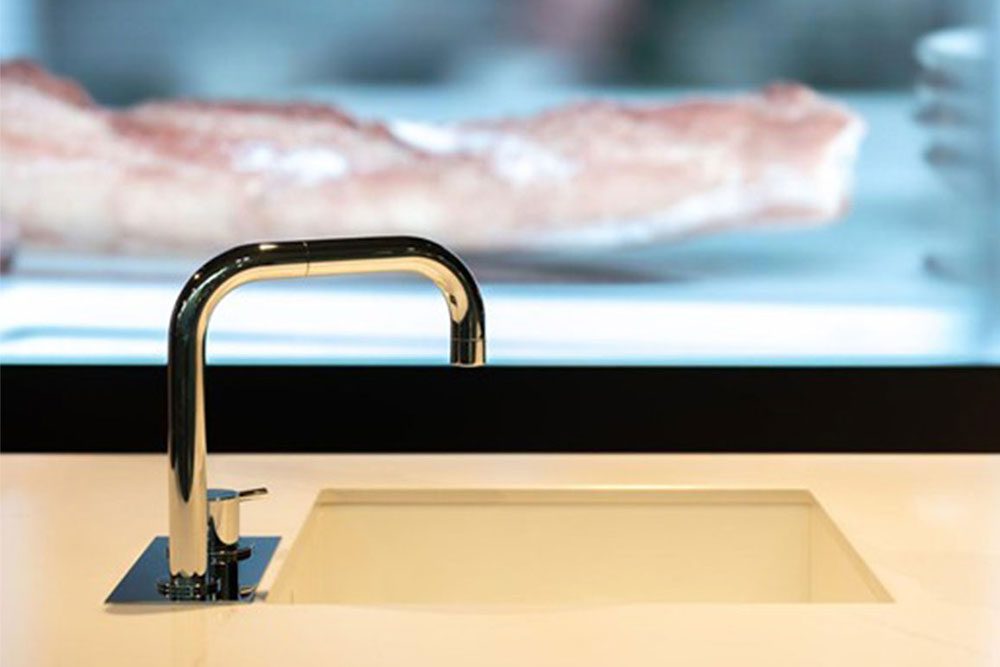
Mounting style influences how much of the bowl you can actually use. Drop-in sinks mount from above and seal around the cutout, which keeps installation straightforward. Undermount sinks attach beneath the countertop and sit flush with its surface, so spills can be wiped directly into the bowl without a rim in the way.
Epoxy undermount sinks have been an industry standard in laboratories for over 40 years and are available in a wide range of sizes. Our undermount sink size chart is a useful companion when you are comparing options.
Plan Your Sinks With LOC Scientific
Every laboratory is different, which is why we build recommendations around your chemicals, your equipment, and your workflow rather than a generic catalog. Since 1986, our team has designed more than 10,400 laboratories, and we handle design, supply, and installation in-house.
Our sinks are made in the USA in epoxy resin and stainless steel, with sizes and configurations to suit specialized layouts. Request a design from LOC Scientific and our team will help you choose dimensions, materials, and layouts built around your work.
Frequently Asked Questions
General purpose lab sinks most often have bowls between 15 by 8 inches and 25 by 15 inches, with depths of about 6 to 12 inches. Compact cup sinks are smaller, while large bowls can exceed 35 inches in length.
Shallow bowls of 5 to 6 inches suit light rinsing and accessible installations. Depths of 10 to 12 inches work well for routine glassware cleaning. Extra deep sinks of 15 inches or more are best reserved for tall vessels, since very deep bowls increase reach and strain.
Yes. Accessible installations require the front of the sink to be no higher than 34 inches above the floor, along with knee and toe clearance below. Shallow bowls help achieve this. Review the 2010 ADA Standards and your local codes before finalizing your design.