
A fume hood protects the person at the bench by exhausting chemical vapors, while a laminar flow hood protects the sample with HEPA-filtered air and gives the user no protection. Choose by what needs protecting: you, your work, or both. This guide compares airflow, protection, applications, and upkeep.
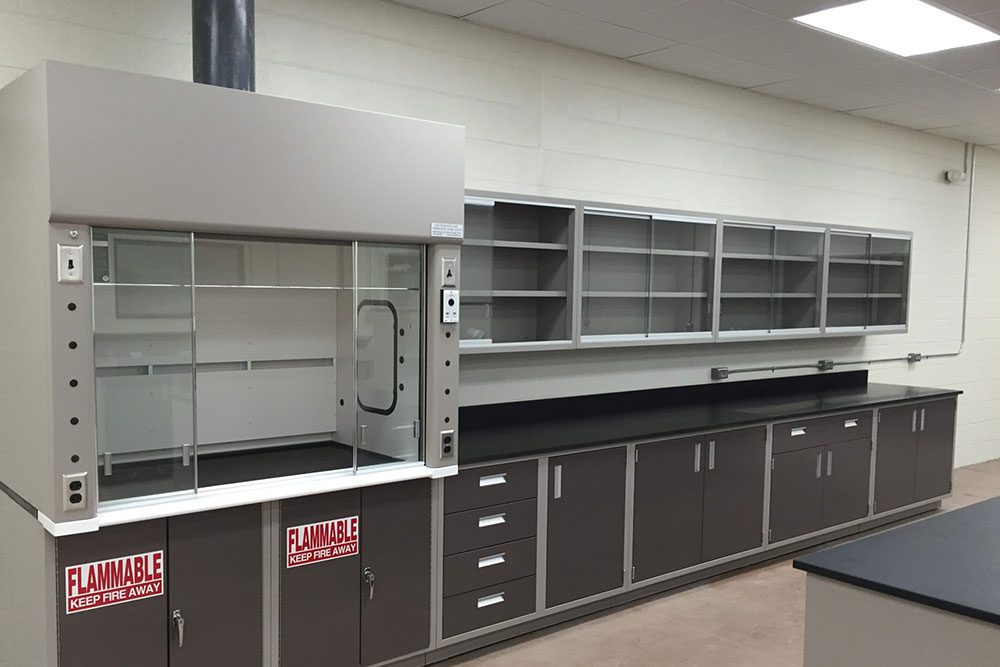
When working in a laboratory environment, selecting the right equipment is critical for both safety and efficiency. Two pieces of equipment often come up in discussions about air control and filtration: the fume hood and the laminar flow hood. Both manage airflow and create safer working conditions, but their functions are distinct, and choosing between them depends on your specific laboratory requirements. This guide compares a fume hood vs. laminar flow hood so you can pick the right one.
Understanding these differences helps you create the right experimental conditions and, more importantly, protect the safety of lab personnel. LOC Scientific has decades of experience designing and installing lab furniture and equipment, including custom fume hoods and accessories, for labs across industries. Let us walk through the key differences so you can decide which is best suited for your lab.
What Is a Fume Hood?
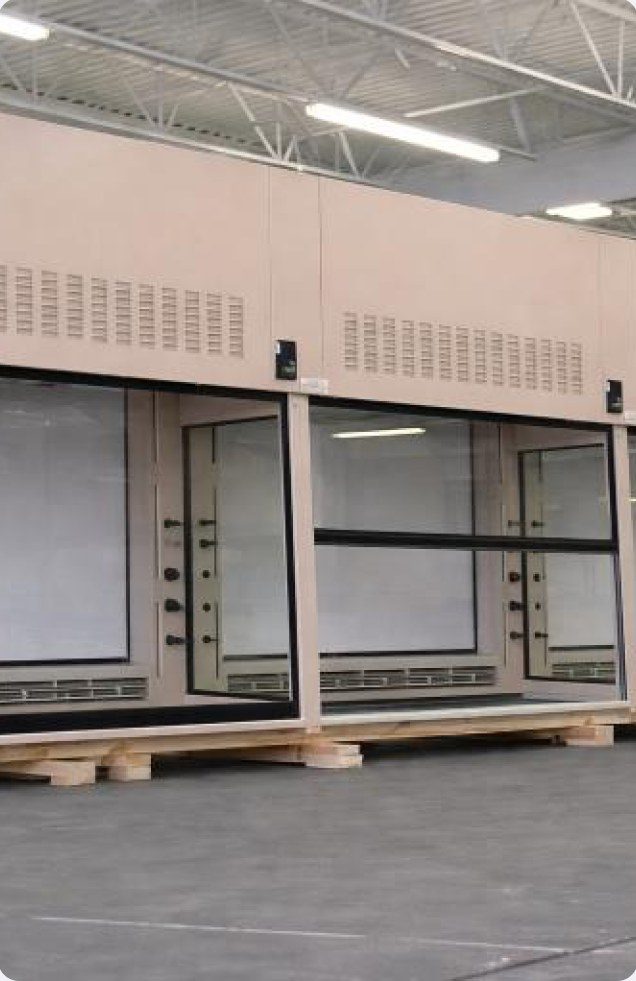
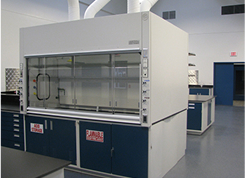
A fume hood is a crucial safety device used in laboratories to protect workers from exposure to harmful chemicals, fumes, and vapors. It operates by drawing air away from the workspace and through the hood opening, so hazardous substances are contained and removed. A ducted hood expels the air outside the building through a ventilation system, while a ductless hood filters it first. OSHA’s fact sheet on chemical fume hoods notes that its Laboratory standard requires hoods to be maintained and to function properly.
There are two primary types of fume hoods: ducted and ductless. Ducted fume hoods vent contaminated air directly outside the building, making them ideal for handling highly toxic substances. In contrast, ductless fume hoods filter the air through carbon or HEPA filters before releasing it back into the lab. They are easier to install and offer flexibility in placement, but Prudent Practices in the Laboratory says ductless hoods have limited applications and should be used only where the hazard is very low. Their filters also need regular maintenance. For a deeper comparison, see our ducted vs. ductless fume hood guide.
Fume hoods are commonly used in labs where hazardous chemicals are handled, such as organic chemistry labs, pharmaceutical facilities, and industrial environments. Regular laboratory fume hood calibration is essential to confirm that airflow rates are correct and the system is functioning optimally. If your apparatus is too tall for a bench, our walk in fume hood guide explains the floor-mounted option.
What Is a Laminar Flow Hood?
A laminar flow hood, on the other hand, is designed to shield the work or sample from contamination rather than protect the user. Air is drawn into the hood, passed through HEPA filters to remove particulates, and then directed across the workspace to create a clean, particle-free environment. The airflow inside the hood is uniform, or “laminar,” which helps prevent dust and other contaminants from entering the work area.
Laminar flow hoods are typically used in industries where maintaining a sterile environment is critical, such as microbiology, pharmaceuticals, and electronics manufacturing. They are ideal for applications where protecting samples from contamination matters more than protecting the user from toxic fumes. In fact, the University of Delaware’s EHS guidance says clean benches do not protect personnel and must not be used with hazardous materials.
Where Does a Biosafety Cabinet Fit?
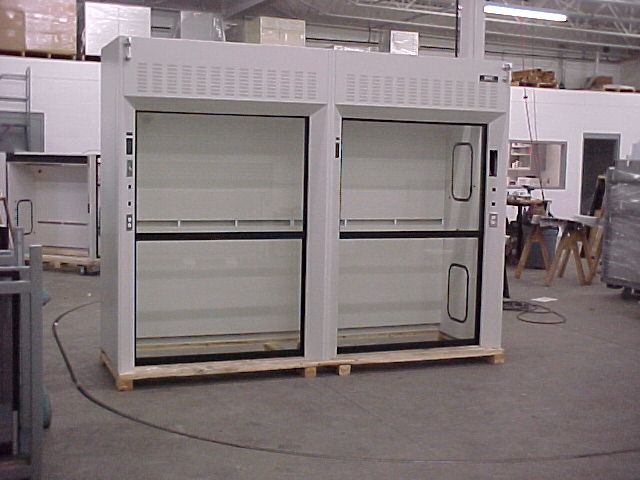
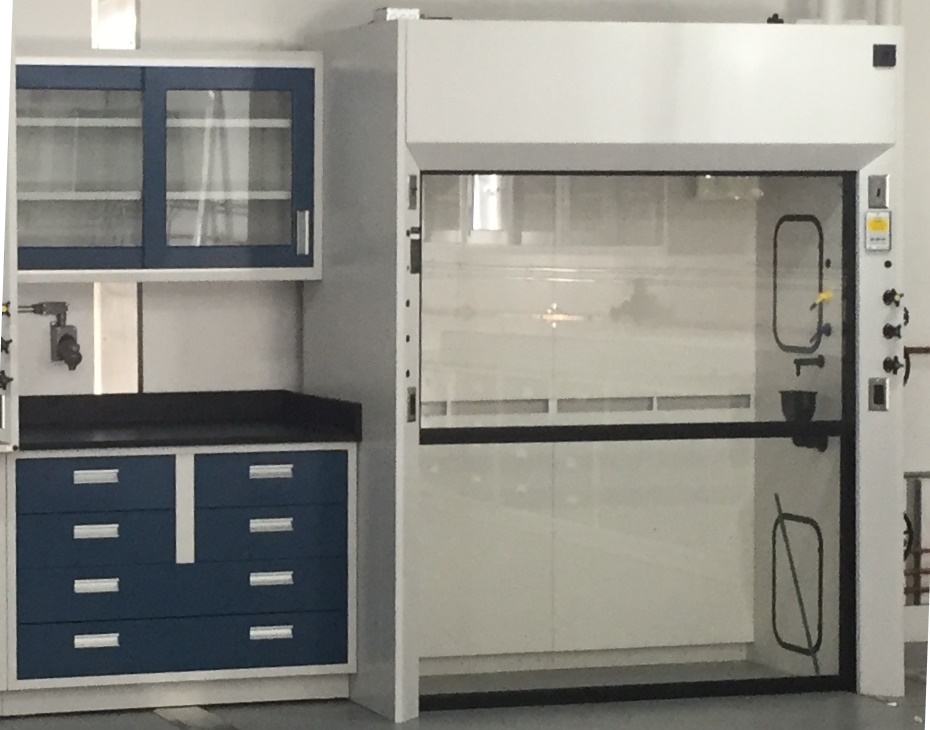
A biosafety cabinet is a third option, and people often confuse it with a laminar flow hood. The two are not interchangeable. According to the U.S. Administration for Strategic Preparedness and Response, a biosafety cabinet protects the user, the environment and the material, while a chemical fume hood protects only the user.
Most cabinets (Class II and III) use HEPA filters in both the supply and exhaust air. A fume hood has no HEPA filtration on the incoming or exhaust air, which is why UNMC’s lab safety guidance says fume hoods should not be used for infectious biological work.
Fume Hood vs. Laminar Flow
Hood: Key Differences
This table summarizes the main differences at a glance. The sections below explain each one.
| Feature | Fume hood | Laminar flow hood (clean bench) | Biosafety cabinet |
|---|---|---|---|
| Protects | The user | The work or sample | The user, the sample and the environment |
| Air handling | Room air is drawn in and exhausted outdoors (ducted) or filtered and returned (ductless) | HEPA-filtered air flows across the work surface and returns to the room | HEPA-filtered supply and exhaust air (Class II and III) |
| Chemical vapors | Designed for chemical work | Never use with volatile chemicals or toxins | Does not reduce chemical exposure |
| Biological agents | Not for infectious work | Not for infectious work | Designed for biological agents |
| Ductwork | Required for ducted models | Not required | Depends on the cabinet type |
Purpose and Function
The most significant difference between a fume hood and a laminar flow hood is their primary function. A fume hood is designed to shield the user from harmful fumes, vapors, and particles. By capturing and removing contaminated air, it helps ensure that lab personnel are not exposed to harmful substances.
On the other hand, a laminar flow hood is designed primarily to protect the work or sample from contamination. HEPA-filtered air flows over the workspace, creating a clean environment for sensitive experiments. However, a laminar flow hood does not protect the user, because the air flows out and back into the lab.
Airflow Direction
In a fume hood, air is pulled from the room into the hood and then directed either through a filter or outside the building, depending on whether the hood is ducted or ductless. This removes toxic or hazardous fumes from the workspace and away from the user.
In a laminar flow hood, the air flows from the hood’s top or back across the workspace. This continuous flow of clean air keeps particles from settling on the working surface, maintaining a contamination-free environment. The air is then released back into the room, making laminar flow hoods unsuitable for handling hazardous chemicals.
User Protection vs.
Sample Protection
The fume hood prioritizes user protection, making it ideal for labs where hazardous substances are handled. Whether you are using volatile chemicals or strong acids, a fume hood draws fumes and vapors away from the lab worker. Biological agents are a different case: a fume hood does not filter air through HEPA, so work with infectious agents belongs in a biosafety cabinet.
In contrast, the primary concern of a laminar flow hood is to shield the sample or workpiece from contamination. These hoods are not designed to handle toxic chemicals or hazardous materials. If user safety is a concern, a laminar flow hood should not be used as a substitute for a fume hood.
Applications
Fume hoods are most commonly used in laboratories where toxic chemicals or heavy solvents are handled. They are designed to meet strict safety requirements for the removal of dangerous fumes. Labs running chemical reactions with solvents often rely on fume hoods to support safe operation.
On the other hand, laminar flow hoods are used in environments where sterility and sample protection are paramount. They are ideal for applications in microbiology, electronics manufacturing, and pharmaceutical labs where maintaining a clean, controlled environment is crucial. Laminar flow hoods are often found in labs that work with non-hazardous materials, but where contamination control is critical.

Choosing the Right Equipment for Your Lab
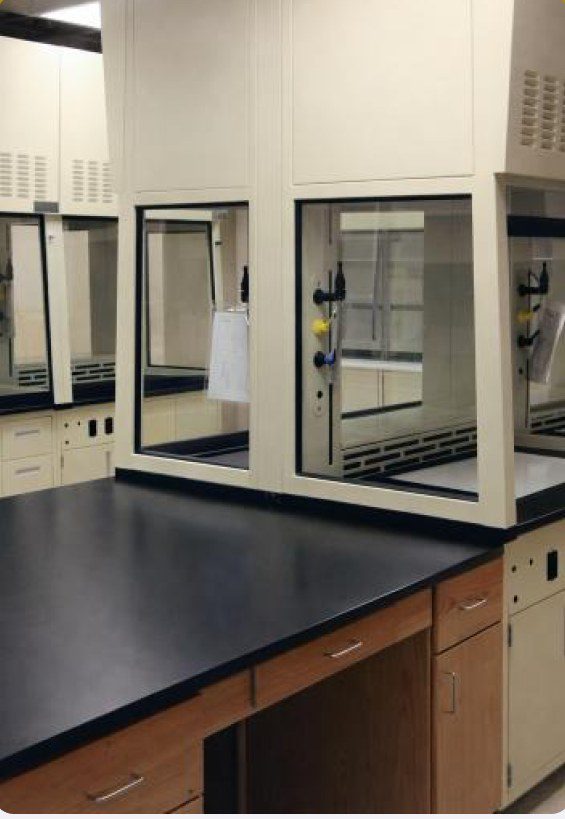
When deciding between a fume hood vs. laminar flow hood, the primary consideration should be the type of work being done in the lab. If your primary concern is protecting lab workers from exposure to hazardous chemicals or fumes, a fume hood is the clear choice. However, if you are using delicate or sterile samples that require protection from environmental contamination, a laminar flow hood is the better option.
- Protect yourself from chemical vapors: choose a fume hood.
- Protect a non-hazardous sample from dust: choose a laminar flow hood.
- Protect yourself and a biological sample: ask your biosafety officer about a biosafety cabinet.
- Move very large apparatus into a hood: consider a floor-mounted unit and read our guide to floor-mounted walk-in hoods.
It is also necessary to consider your lab’s infrastructure. Fume hoods, especially ducted models, may require significant modifications to the building’s HVAC system, while laminar flow hoods are generally easier to install as they do not require ductwork. For labs that handle both hazardous substances and sterile samples, it may be necessary to have both a fume hood and a laminar flow hood in different areas of the lab.
Maintenance and Calibration
Whether you choose a fume hood or a laminar flow hood, regular maintenance and calibration are crucial for keeping the equipment working as intended. Laboratory fume hood calibration keeps airflow at safe levels, protecting the user from harmful fumes, and SEFA 1 recommends repeating performance testing at least annually. Laminar flow hoods need regular checks too, so the HEPA filters keep removing particles from the air.
Additionally, investing in durable metal lab cabinets or stainless-steel cabinets can further improve the safety and functionality of your lab. These materials are highly resistant to corrosion and chemical damage, making them ideal for labs where harsh chemicals or solvents are frequently used. Both sit within a wider range of lab casework built for chemical-resistant laboratory storage.
When comparing a fume hood vs. laminar flow hood, understanding the key differences in function, airflow, and application is essential. Fume hoods are designed to protect the user from harmful fumes and chemicals, while laminar flow hoods are intended to protect the work from contamination. The right choice depends on your lab’s specific needs and the materials you are using.
LOC Scientific offers a wide range of laboratory fume hoods and laboratory equipment designed to meet the unique requirements of various industries. With our extensive experience in lab design, installation, and customization, we can help you select the right equipment to keep your lab safe and efficient. Contact us today to learn more.

Frequently Asked Questions
No. A laminar flow hood protects the sample, not the person, and it blows HEPA-filtered air across the work surface toward the user. University safety guidance says clean benches must not be used with hazardous materials, including volatile chemicals and toxins. If you work with chemical vapors, use a fume hood that exhausts air away from you.