
Designing to Win: How 18 Science Classrooms were Transformed for Success
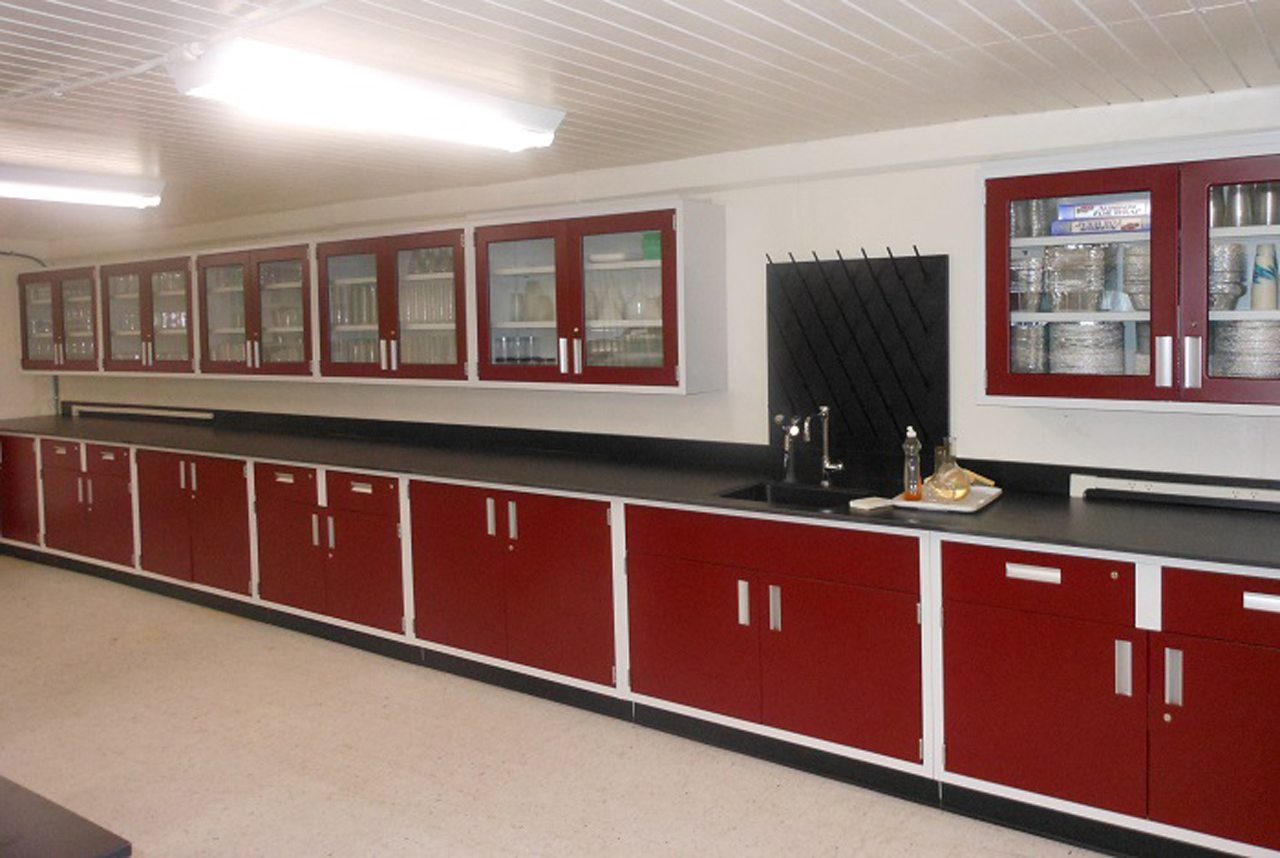
The renovation and expansion of the science classrooms of the Virgin Islands Dept. of Education presented a unique opportunity for LOC Scientific. The overall goal of the spaces was to enhance the original layout by creating a design that would be more student/user friendly. The renovated classrooms needed to be equipped with state-of-the-art laboratories designed for their targeted needs.
A more functional lab environment embraces a stronger learning environment while allowing these professional science teachers to focus on subject matter, not the lack of sufficient and antiquated laboratory furnishings. Additionally, these classrooms needed to be custom designed for Chemistry, Biology, Ecology, Physiology, Osteology and Mathematical.
From Design to Creation – A Solid Partnership with the Dept. of Education
The Virgin Island Department of Education and LOC Scientific kicked off the project in January. The renovation would require installing and integrating the latest laboratory furniture and equipment for 18 different classrooms, so students could begin working and thriving in an environment that encouraged both learning and engagement.
Design and planning took place from January through April, and LOC Scientific returned to the Islands over a course of 4 months – 4 times. “With the DOE engineering and the actual educators, we went thru the lab step by step and reviewed each facet of the plan with each educator. Dealing with existing structures with many challenges, we worked to maintain the original structure but meet the needs to help stay within budget. This required planning for 18 laboratories, all not the same,” explained Noah Nichols. “We had to start with basic design concepts and build out the complexities from there.” Of course, to add to that, the educators were working within a stringent budget.
Our initial site visit exposed a list of challenges. While structurally sound, the 18 science classrooms needed extensive renovation with the DOE in a span of 4 months engineering, and 3 site visits including the islands of St. John (2 labs), St. Croix (8 labs) and St. Thomas (10 labs), each island with their specific challenges. It was important to look at the way the classroom functioned while considering the needs of the future.
To help save time and money, LOC Scientific screened and hired the Islands’ local professional removal specialists, plumbers & electricians. They also sent LOC personnel from the states to assist as well.
As it turns out, the Department of Education did not have a project of this nature, size & magnitude combined in their resume. LOC Scientific took the lead on the end to end renovation of classrooms labs. “We went to great lengths to be a transparent partner, assure them that we were with them every step of the way and put them at ease. It was important to ensure that the client was educated and comfortable about the choices being made. And it paid off!” noted Wayne Nichols. The project was implemented in January and finished by October – 3 months ahead of schedule.
“One of the first things we had to do was to get an understanding of what the schools wanted to accomplish by renovating these labs,” says Nichols. They worked side-by-side with the government, administrators and most importantly the faculty. “I was blown away by how real and detailed the lab designs were,” says school administrator Smith. “LOC Scientific walked me thru every classroom and I felt at ease when I could see our school’s teaching future forming.”
Metal cabinets, due the humidity, were recommended. The cabinetry color schemes were based on the each of the school’s colors – allowing each school to have a different color combination. Gray with burgundy fronts, off white with sea blue fronts, dark blue fronts, as well as unique color combinations were used.
After demolition and renovation of the labs’ walls, floors and ceilings, LOC recommended and installed certified laboratory fume hoods and complementing casework. The labs featured matching fume hoods, plumbing fixtures and sinks. The ductless fume hoods required chemical assessments, which determined the filters to be used. Each combination of filters was unique to the classroom’s research.
Electrical outlets were replaced during the renovation, and pedestal electrics were installed on each of the countertops. Student desks and premium lab stools were also installed as seating options. “I believe that some of the best lab workspaces are open layouts, designed to help drive engagement between the students and the instructors,” said Wayne Nichols.
The Next Challenge? Cabinets by Train.
LOC Scientific began to pull the materials together: Lab components from Jacksonville, Florida. Cabinets shipped by train. Fixtures were coming from Chicago. Then they had to be loaded on to ships headed for the Virgin Islands. When it was done, LOC Scientific had 16 containers to be distributed to 3 islands.
Two crews in St. Thomas and St. Croix were on standby to receive, unpack and install the laboratories once they arrived. Timing was key in this process because once the materials were delivered they were required to be at the schools immediately.
New Classrooms. New Future.
Now, with room to move about and perform their experiments, students can focus on excelling at their work. “We wanted to come up with solutions that fit their needs and their budget,” said Wayne Nichols. “But not only does it look good, but the students and faculty actually feel good about doing their work – which is learning. It’s something we’re really proud of.”
To celebrate the completion of the work, the Virgin Islands Government held a ribbon cutting ceremony, featuring LOC Scientific as the Guest of Honor. The reception from the V.I. Government, administrators and students has been very positive.
“LOC Scientific really solved some problems in terms of efficiencies, instruction and budget. They really got it,” said Stacy George, an engineer at the DOE. Donna Christiansen, the US Representative House of Rep, V.I. heard nothing but good things about LOC during the installation of the laboratories. DOE Representative Vince Pinney was equally impressed with the end result.
All agreed that the collaboration between the Department of Education, the School Faculty and LOC Scientific really helped push this project to its success.