
Are Epoxy Resin Countertops Durable Enough For Lab Use?
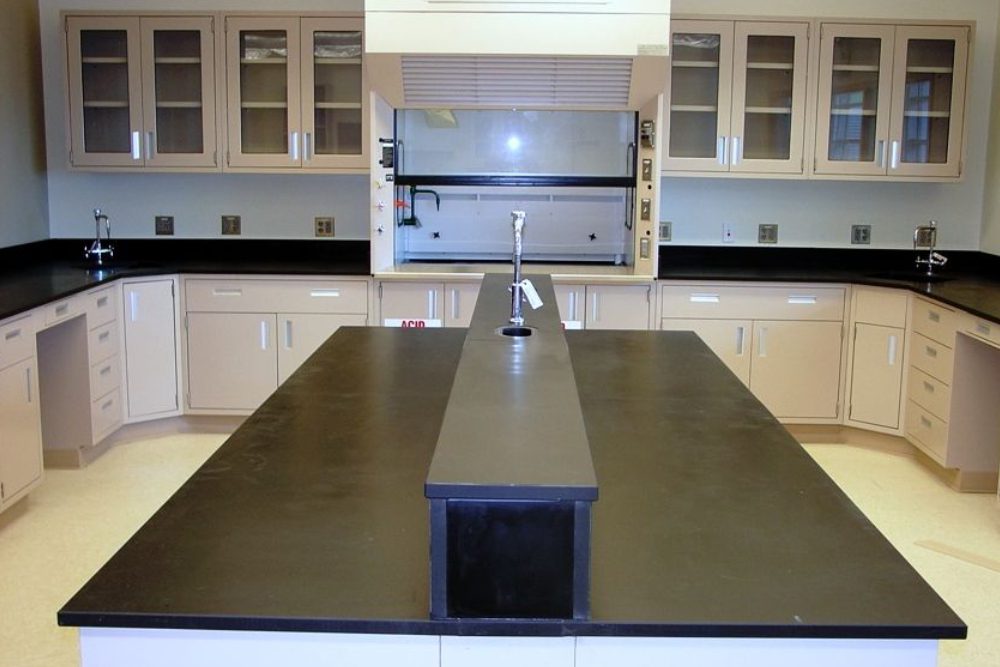
Epoxy resin countertops durability is often a primary consideration when designing a lab space that operates under demanding daily conditions. From chemical exposure to repeated cleaning, surfaces must handle stress without losing performance or appearance.
Many facilities consider epoxy systems for laboratory countertops because of their strength and adaptability.
Material Composition and Epoxy Resin Countertops Durability
Epoxy resin countertops are created by combining resin and hardener, forming a rigid surface through a chemical reaction. This process results in a dense, non-porous structure that resists liquid absorption and surface damage. The finished material bonds tightly to the substrate and adds stability and structural strength in challenging environments.
This composition contributes directly to epoxy resin countertops durability by limiting weaknesses often found in porous materials. Liquids, stains, and minor abrasions have less impact on the surface over time. However, the quality of raw materials and mixing accuracy can affect long-term performance and consistency across installations.
Resistance to Chemicals and Spills
Laboratory work frequently involves exposure to acids, solvents, and other reactive substances that can damage less durable surfaces. Epoxy coatings resist many chemicals – suitable for general lab applications that involve controlled handling of substances. Spills can usually be cleaned without leaving permanent marks when addressed quickly.
Not all epoxy formulations respond to aggressive chemicals in the same way. Prolonged exposure to strong acids or solvents can lead to discoloration or surface wear over time. Proper cleaning habits and protective measures help maintain epoxy resin countertops durability and extend usability in high-demand environments.
Heat Tolerance in Laboratory Settings
Heat exposure is another factor that affects countertop performance in scientific spaces. Epoxy resin surfaces can handle moderate heat levels, which suits routine lab procedures that do not involve extreme temperatures. Short-term contact with warm equipment typically does not cause immediate damage.
Direct exposure to high heat or open flames can lead to surface distortion or discoloration. Epoxy does not perform as well as some specialized materials under sustained high-temperature conditions. Using heat pads or barriers reduces thermal stress and protects the surface during intensive applications.
Surface Strength and Impact Resistance
Daily lab activity includes moving equipment, handling tools, and occasional accidental drops. Epoxy countertops create a strong surface that resists minor impacts and scratches during routine use. Their seamless design reduces weak points where cracks or chips might develop.
Heavy impacts or sharp objects can still cause damage under certain conditions. Epoxy performs well under typical lab use, but it is not completely resistant to physical stress. Careful handling practices help preserve the surface and reduce the risk of long-term structural issues.
Maintenance and Long-Term Performance
Routine cleaning plays a major role in preserving epoxy resin countertops durability over time. The non-porous surface allows for easy removal of spills, which reduces the risk of staining and contamination. Regular maintenance keeps the surface functional and maintains its visual appearance in active lab settings.
Over time, signs of wear may appear, especially in high-traffic areas or under repeated exposure to harsh conditions. One advantage of epoxy is that it can often be refinished rather than replaced entirely. Applying a new coating layer can restore the surface and extend its service life without major disruption.
Installation Quality and Its Impact on Durability
The performance of epoxy countertops depends greatly on proper installation techniques and thorough surface preparation. A well-prepared substrate helps the epoxy bond securely, creating a stable and long-lasting surface that maintains its integrity under daily use.
Inconsistent or rushed preparation can introduce issues early in the process. Poor preparation often leads to bubbling, peeling, or uneven curing, all of which reduce durability and affect the final appearance over time.
Professional installation improves consistency and helps avoid common application issues. Factors such as curing time, environmental conditions, and material thickness all influence the final result. Attention to these details plays a major role in achieving reliable performance in laboratory environments.
Is Epoxy a Reliable Choice for Laboratory Use?
Epoxy resin countertops offer a balance of durability, chemical resistance, and ease of maintenance for many laboratory applications. They perform well in controlled environments where extreme heat and aggressive chemicals are limited. Their ability to be refinished adds value for facilities looking to extend surface life.
That said, some specialized labs may require materials with higher resistance to heat or corrosive substances. Choosing the right surface depends on the specific tasks performed within the space.
Work with Experts in Laboratory Surfaces
LOC Scientific delivers laboratory countertop solutions backed by hands-on training and real-world experience as a licensed and accredited, veteran-owned and staffed, military-trusted school. If you are planning a lab upgrade or new installation, contact us to learn how our epoxy surface systems can align with your project goals.